HP subscription onboarding
Guided setup for a printer inclusive subscription model.

Project in a minute
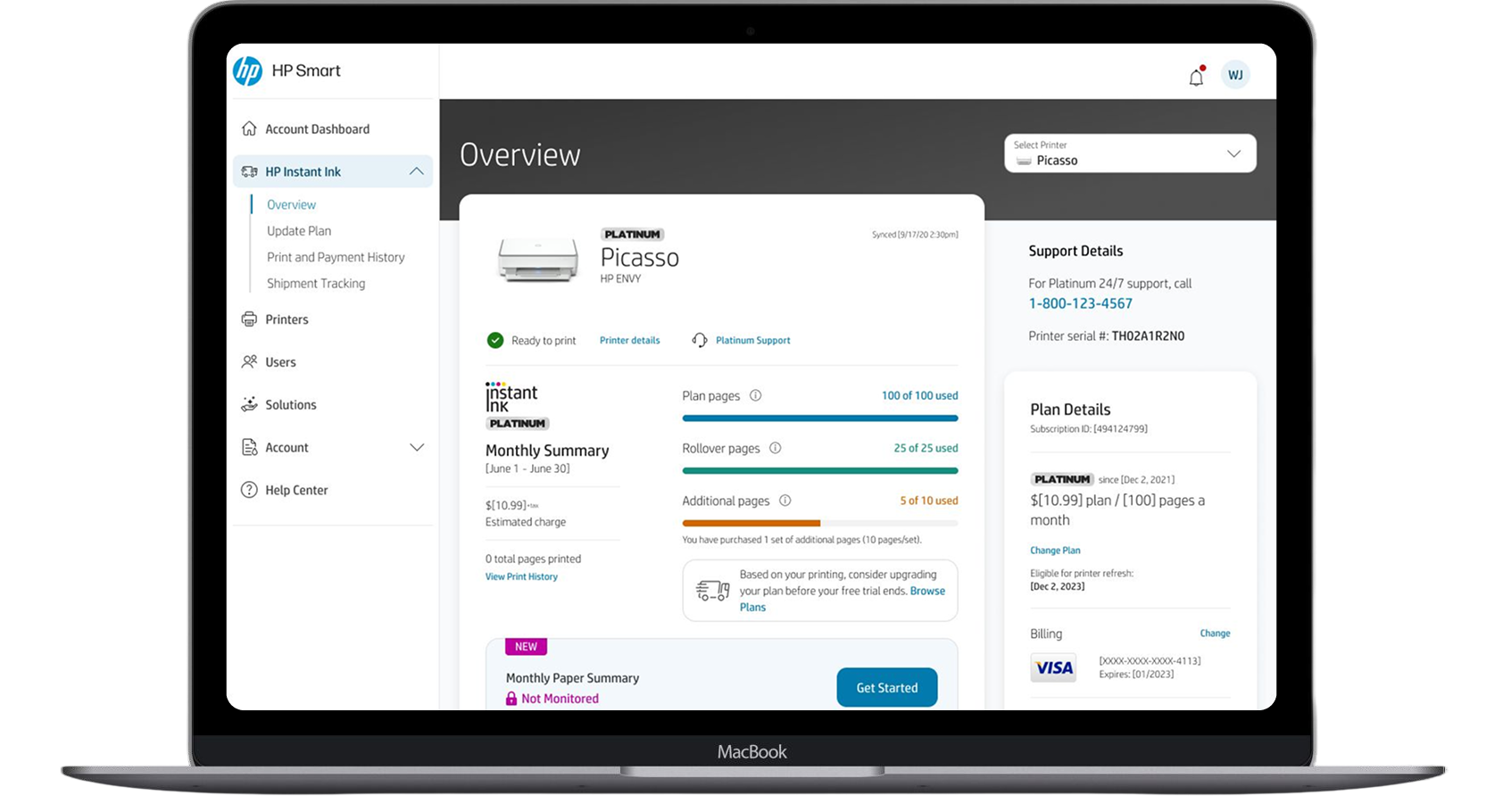
I worked on an evolution of the HP subscription experience where the plan included not just ink, toner, or paper — but the printer itself.
The model was already past an initial MVP but still in testing and implementation. My work focused on subscription setup and the account experience: helping users configure a plan, understand what was included, and review the service before committing.
Because some service rules were still being clarified, the design work also helped surface edge cases around delivery, replacement, returns, printer status, and support.
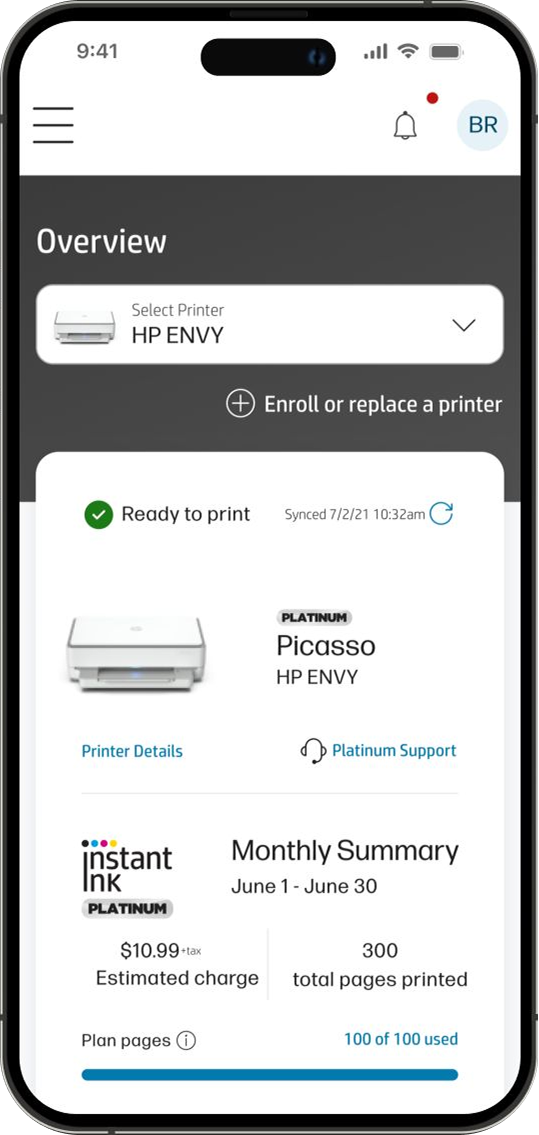
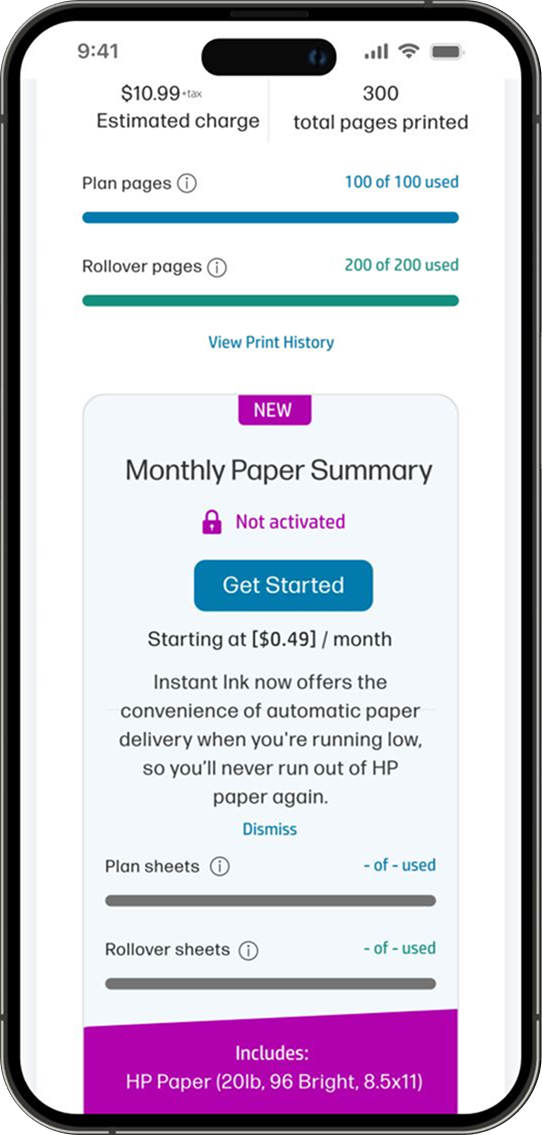
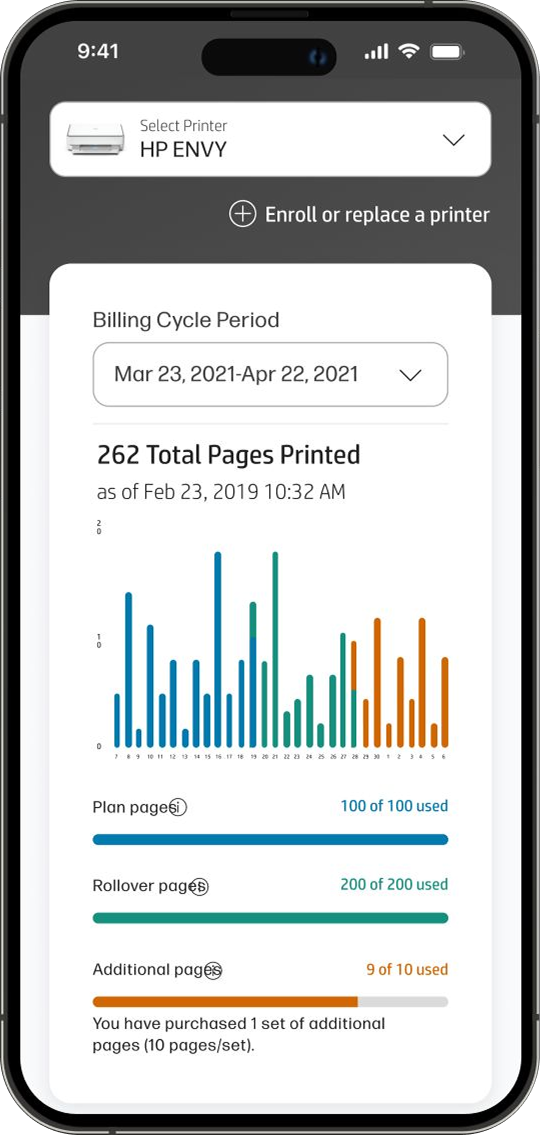
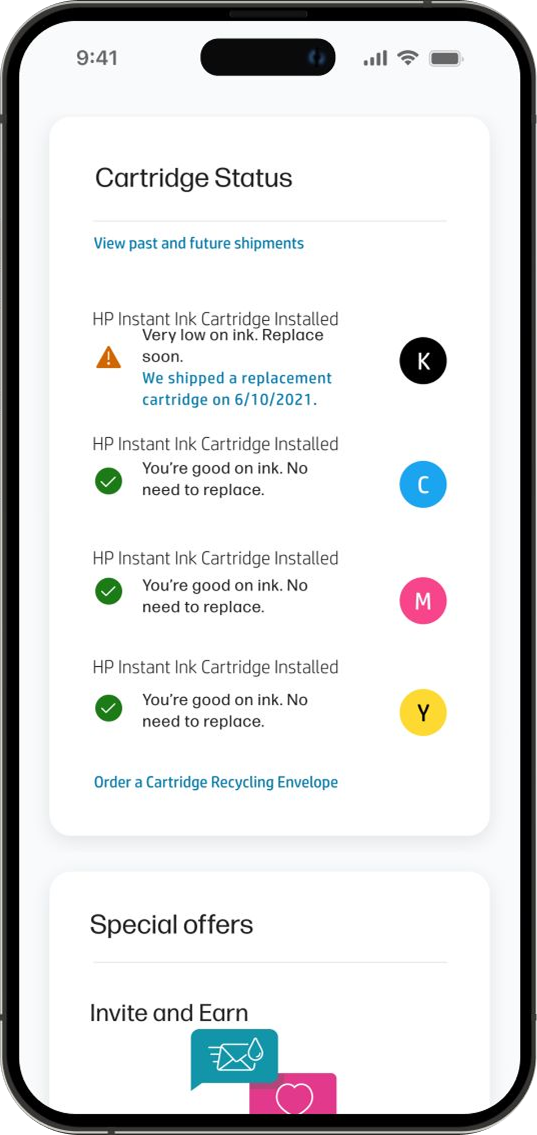
A guided setup flow combining printer selection, monthly page volume, paper add-on, and order summary.
My contribution
I worked as an individual contributor focused on UX/UI execution, design system application, and implementation handoff.
- Structure the subscription setup into clear decision steps
- Design the printer selection, page volume, and paper add-on flow
- Translate service rules into visible states and next steps for the user
- Surface edge case questions about delivery, returns, replacement, and printer status
- Keep the experience aligned with HP's existing design standards
What made it complex
The interface needed to make a physical service model clear before the user committed.
- The subscription included a physical printer, not just a digital plan or supply delivery.
- Some rules were still being clarified during implementation, so UI work surfaced questions the team needed to answer.
- The experience needed to clearly explain service states: what was selected, what was included, what would be delivered, what could change, and what would happen next.
Unlike a purely digital subscription, this setup needed to account for physical products, delivery, returns, support, and service conditions.
How I approached it
Understand the service state
Before designing screens, I worked to understand what the user needed to know at each point: printer selected, page volume, paper add-on, price, delivery, trial conditions, and next steps.
Make choices sequential
I structured the setup so users could make one decision at a time, rather than facing the full service model all at once.
Surface unanswered edge cases
As the UI took shape, I helped identify open questions about printer delivery, returns, replacement, broken device scenarios, and status visibility.
Document for implementation
I documented selections, states, edge cases, and handoff details so engineering and QA could implement the experience with less ambiguity.
Key design decisions
Design decisions that made the subscription easier to set up, review, and understand.
01 · Turn a new subscription model into a guided setup
The new model required users to configure several connected choices: printer, monthly page volume, optional paper, and a final subscription summary. I structured the experience as a guided setup so users could understand each decision in sequence, rather than facing the full service model all at once.
02 · Surface edge cases through UI work
As we designed the panel, several service questions became visible: delivery timelines, printer status, return flows, replacement scenarios, and what happens when a printer breaks or needs to be sent back. I helped raise these questions with HP and translate the answers into clearer states, flows, and interface decisions.
03 · Make the subscription bundle reviewable
Because each selection affected the final subscription, users needed a clear way to review what they had chosen before continuing. The summary experience connected the selected printer, page plan, paper add-on, monthly price, trial information, shipping, and service conditions in one place.
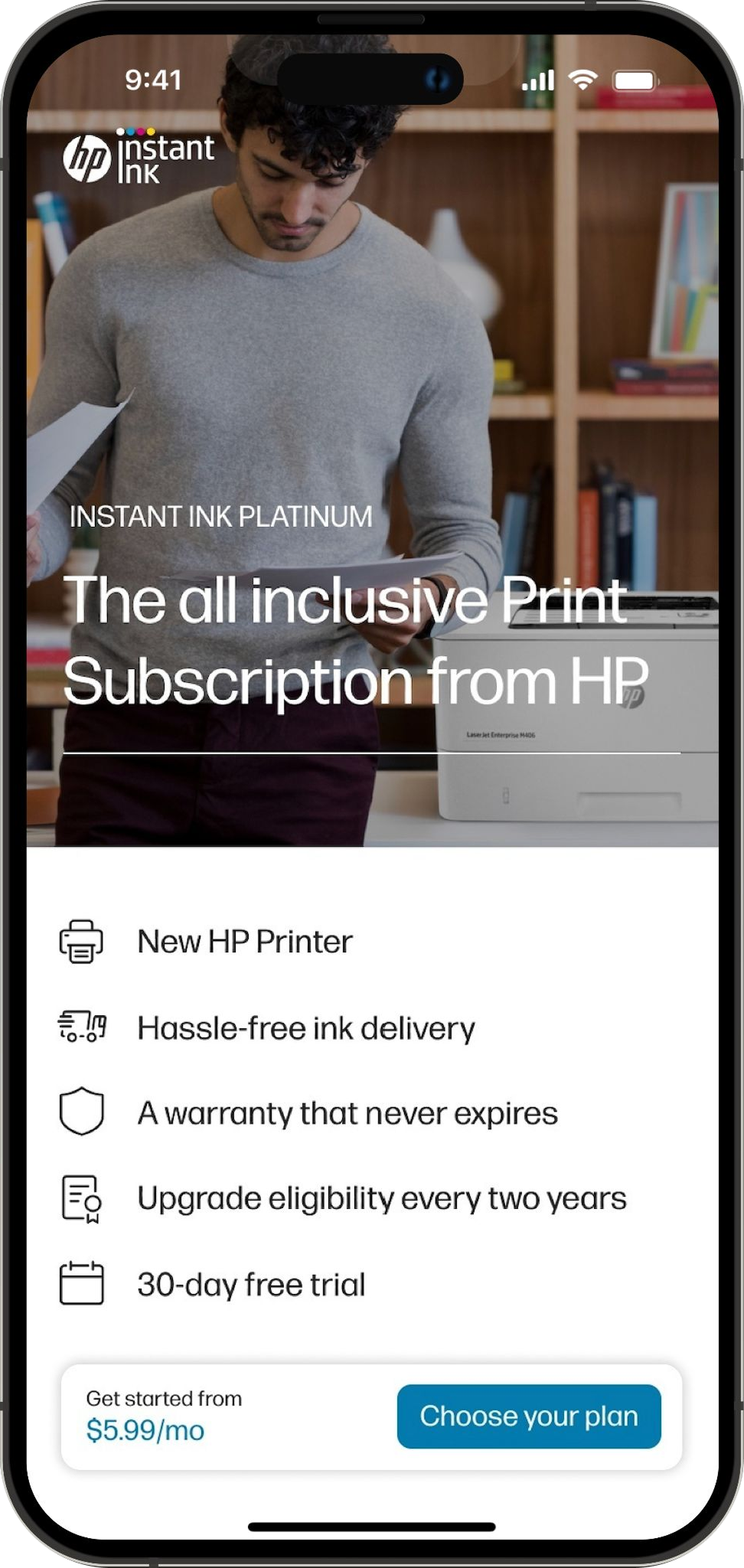
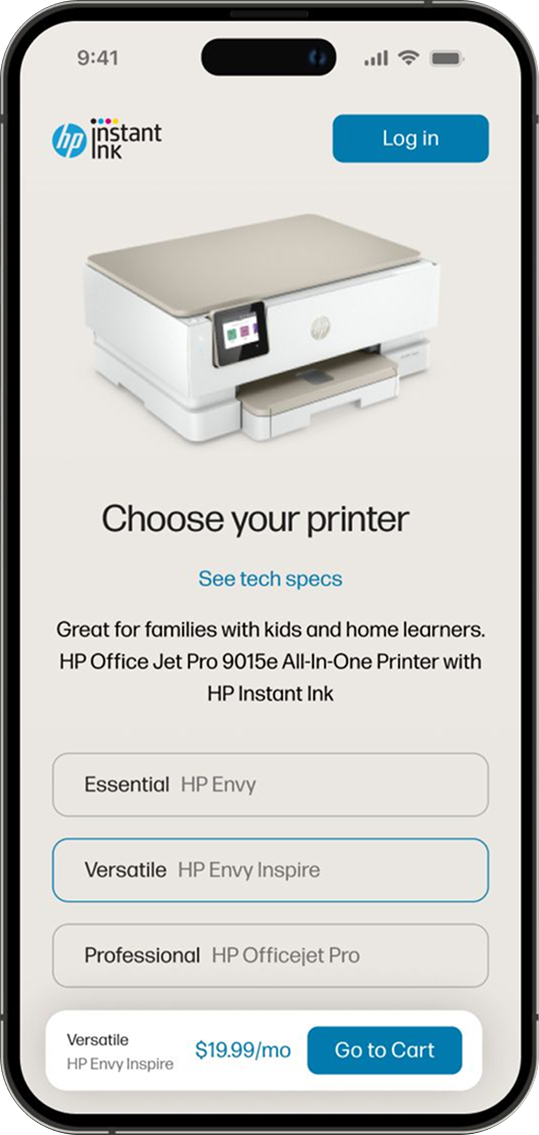
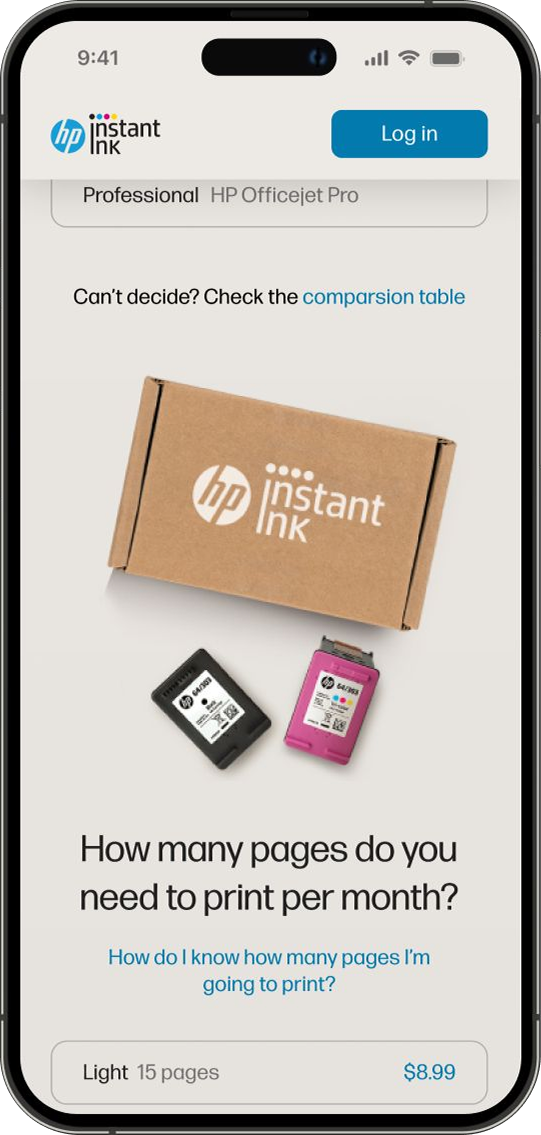
The review step connected selected items, included benefits, price, trial conditions, and service requirements in one place.
Outcome
- Delivered a clearer setup flow for a printer-inclusive subscription model
- Helped translate service rules into visible states and next steps for the user
- Surfaced edge case questions about delivery, replacement, returns, and printer status
- Kept the experience consistent with HP's existing design standards and implementation needs
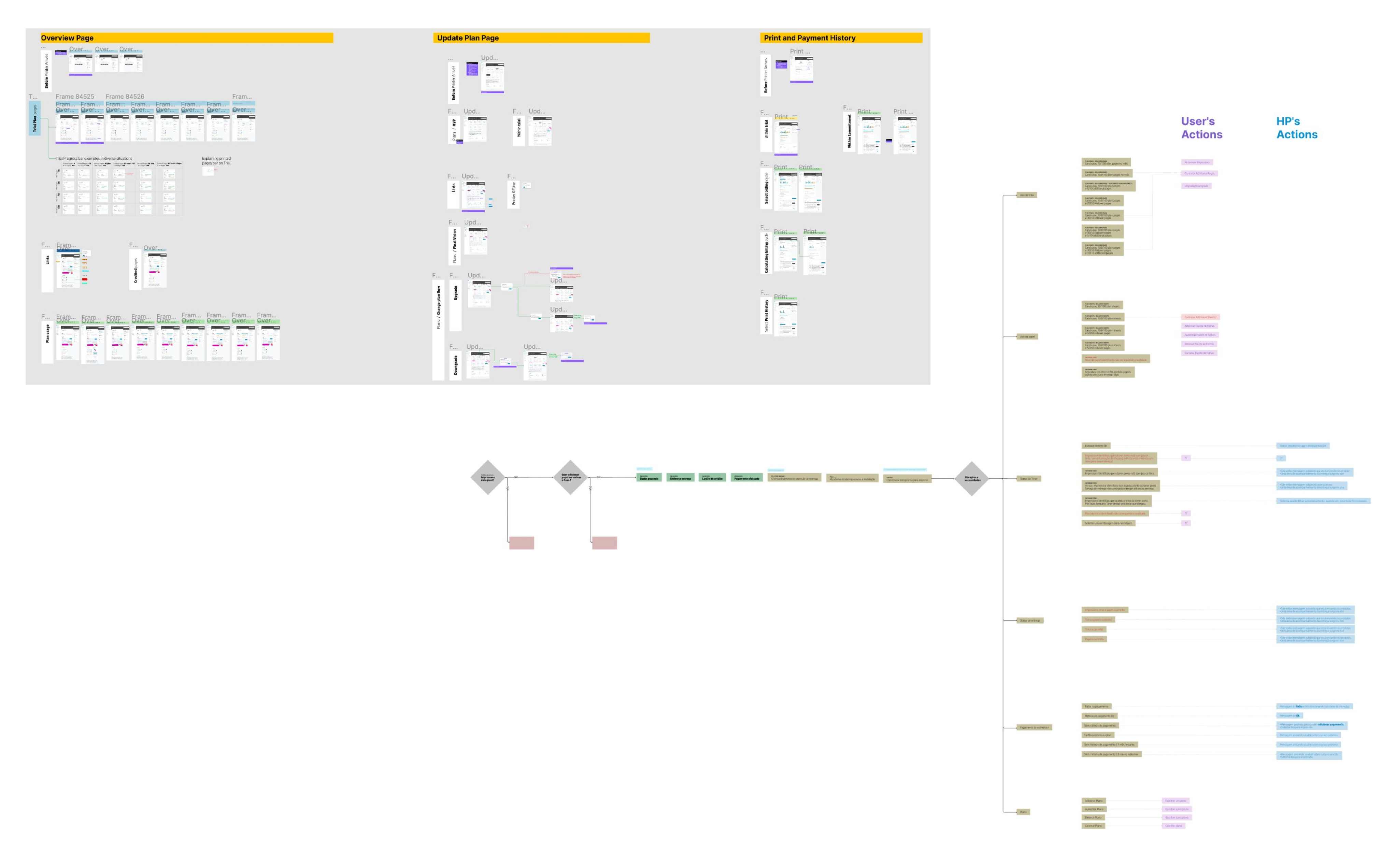
Open questions about delivery, returns, replacement, and printer status were translated into visible states and handoff notes.
Reflection
This project reminded me that UI work can surface product questions that haven't been resolved yet.
When a subscription includes physical service operations, the interface isn't just organizing choices. It's helping the team make the service logic explicit.